
7 Employee Retention Strategies: How Australian SMEs Can Improve Staff Retention
The top 7 employee retention strategies Australian SMEs can use to improve staff retention, reduce turnover, and keep top performers engaged.
 Stephanie Manda
Australian small and medium enterprises (SMEs) can improve staff retention by creating a strong onboarding program, offering fair remuneration and tax-effective benefits, prioritising internal career growth and upskilling, accommodating flexible working arrangements, and fostering psychological safety and strong team culture.
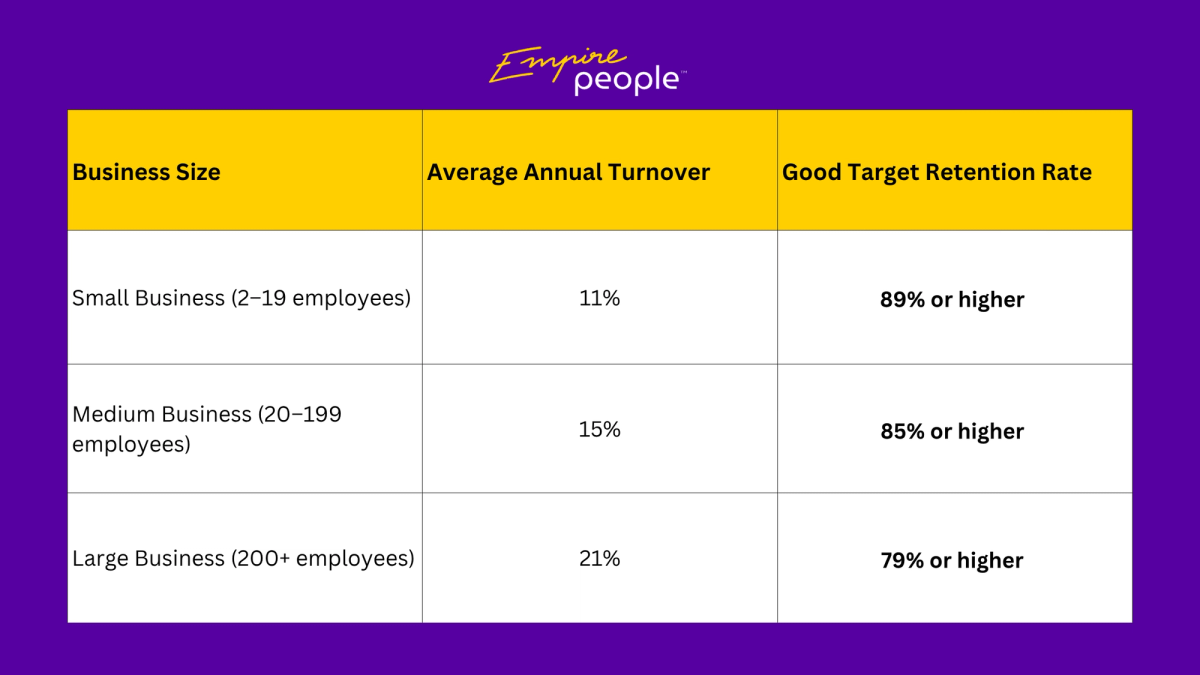
According to the Australian HR Institute (AHRI) Quarterly Australian Work Outlook, the average employee turnover rate across Australian organisations was 15% for the 12 months to June 2025.
Key Takeaways
- Build onboarding that helps new hires become productive in their first 90 days.
- Match pay, benefits, and flexibility to what Australian employees value most.
- Use career pathways, recognition, and strong managers to reduce avoidable turnover.
- Track retention regularly so you can spot risks before top performers leave.
What is a Good Employee Retention Rate in Australia?
A good employee retention rate in Australia generally falls between 80% and 85% (corresponding to an annual turnover rate of 15% to 20%). According to Australian Bureau of Statistics (ABS) Job Mobility data, turnover and mobility rates fluctuate depending on industry, but maintaining a retention rate above 85% is widely considered strong for Australian SMEs.
7 Proven Employee Retention Strategies for Australian SMEs
1. Create a Strong Onboarding Program
When you create a strong onboarding program, you’re helping new employees feel confident, supported, and productive from their very first day. The first 90 days set the foundation for role clarity, engagement, and alignment with company culture.
- Standardise the Experience: Use a new hire checklist template to ensure IT setup, compliance training, and team introductions happen seamlessly before day one.
- Assign a Peer Buddy: Pair new team members with experienced colleagues to soften the learning curve and foster early workplace connections.
- Define90-Day Milestones: Clear performance goals prevent early ambiguity and lower first-year churn.
Gallup finds that only 12% of employees strongly agree that their company does a great job onboarding.
2. Offer Fair Remuneration and Tax-Effective Benefits
Pay matters, and so do the benefits around it. Competitive salaries, salary sacrifice options, extra leave, and other tax-effective benefits can improve staff retention by showing employees they are valued and fairly rewarded.
- Salary Packaging and FBT Exemptions: Leverage Fringe Benefits Tax (FBT) exemptions or concessions (such as novated leases, work laptops, and portable electronic devices).
- Market Rates: Review them regularly using Australian industry salary guides (e.g., Hays Salary Guide or SEEK Salary Insights) to prevent talent loss to larger competitors.
3. Prioritise Internal Career Growth and Upskilling
Employees stay longer when they can see a future within your organisation. Oftentimes, the primary driver of voluntary turnover in SMEs is a lack of visible career progression.
- Individual Development Plans (IDPs): Map out 12-month skill acquisition goals tied to clear promotion or role expansion pathways.
- Micro-Credentials and Study Support: Allocate a learning budget or study leave for short courses, accredited TAFE modules, or industry-specific certifications.
4. Embrace Flexibility and the Right to Disconnect
With the Australian Right to Disconnect legislation incorporated under the Fair Work Act 2009, modern workplace flexibility has become a retention driver.
- Hybrid and Agile Workplace: Offer core working hours paired with location flexibility where operationally feasible.
- Respect Boundaries: Establish policies around out-of-hours communication to prevent burnout and support healthy work-life balance.
5. Foster Psychological Safety and Open Feedback
People stay where they feel heard, respected, and safe to speak up. Open communication, transparency, and regular feedback loops help employees raise problems early instead of quietly disengaging.
- Regular 1-on-1s: Use 1-on-1 meetings to check on your employees’ wellbeing and workload.
- Stay Interviews: Conduct proactive stay interviews quarterly to understand what keeps top talent engaged before they start looking elsewhere.
6. Implement Meaningful Recognition and Reward Systems
Recognition is one of the simplest employee retention strategies, but it works best when it is specific and consistent. It does not always require high capital expenditure.
- Immediate Recognition: Acknowledge wins publicly in team channels or meetings as soon as they occur.
- Reward System: Align rewards with individual preferences, whether through extra time off, professional development funds, or bonuses.
7. Cultivate a Strong Team Culture and Leadership Skills
Culture is often the deciding factor when pay and role are similar. A strong team culture built on trust, accountability, and good leadership makes people more likely to stay, even during busy or challenging periods.
- Invest in Leadership and Management Training: Promote technical experts into leadership roles only after equipping them with essential people management skills, empathy training, and conflict-resolution tools.
- Lead with Psychological Safety: Encourage open dialogue, admit mistakes at the leadership level, and foster an environment where employees feel safe proposing new ideas or asking for help.
How to Calculate Employee Retention Rate?
Employee retention rate is calculated by dividing the number of employees at the end of a period by the number of employees at the start of that period, then multiplying by 100.
This gives you a simple percentage that shows how many employees stayed over the timeframe. It provides a clearer picture than turnover alone, allowing you to easily compare retention across teams, roles, or locations.
Use this formula to measure how many employees remained with your company over a specific timeframe:
Retention Rate (%) = (Number of employees who stayed throughout the period / Number of employees at the start of the period) x 100
For example, if you start the year with 50 employees and 45 of those same employees remain at the end of the year, your retention rate is 90% (a 10% voluntary turnover rate).
Frequently Asked Questions
Is 20% a high turnover rate?
Yes, a 20% turnover rate is considered high for most Australian businesses. It sits well above the national average of 15%. While acceptable in high-volume industries like hospitality or retail, a 20% annual turnover rate in SMEs usually indicates underlying issues with onboarding, leadership, remuneration, or workplace culture.
What benefits will improve staff retention?
Flexible working options, professional development allowances, health and wellness stipends, and tax-effective salary packaging are the most effective benefits for improving staff retention in Australia.
How do you keep top performers from leaving?
You can keep top performers from leaving by offering above-market compensation, clear career advancement opportunities, high autonomy, and regular feedback through stay interviews.
Top performers leave when they feel unchallenged, micromanaged, or undercompensated relative to market value.
Start Improving Your Staff Retention Today
Improving employee retention starts with practical changes: better onboarding, stronger management, fair rewards, and more flexibility. If you want to reduce turnover and keep great people longer, download the new hire checklist template for managers from Empire People today.